River Habitat Restoration: In-Stream Complexity and Biotic Recovery
Physical heterogeneity in flow velocities, depths, and substrates is the direct prerequisite for self-sustaining aquatic communities.
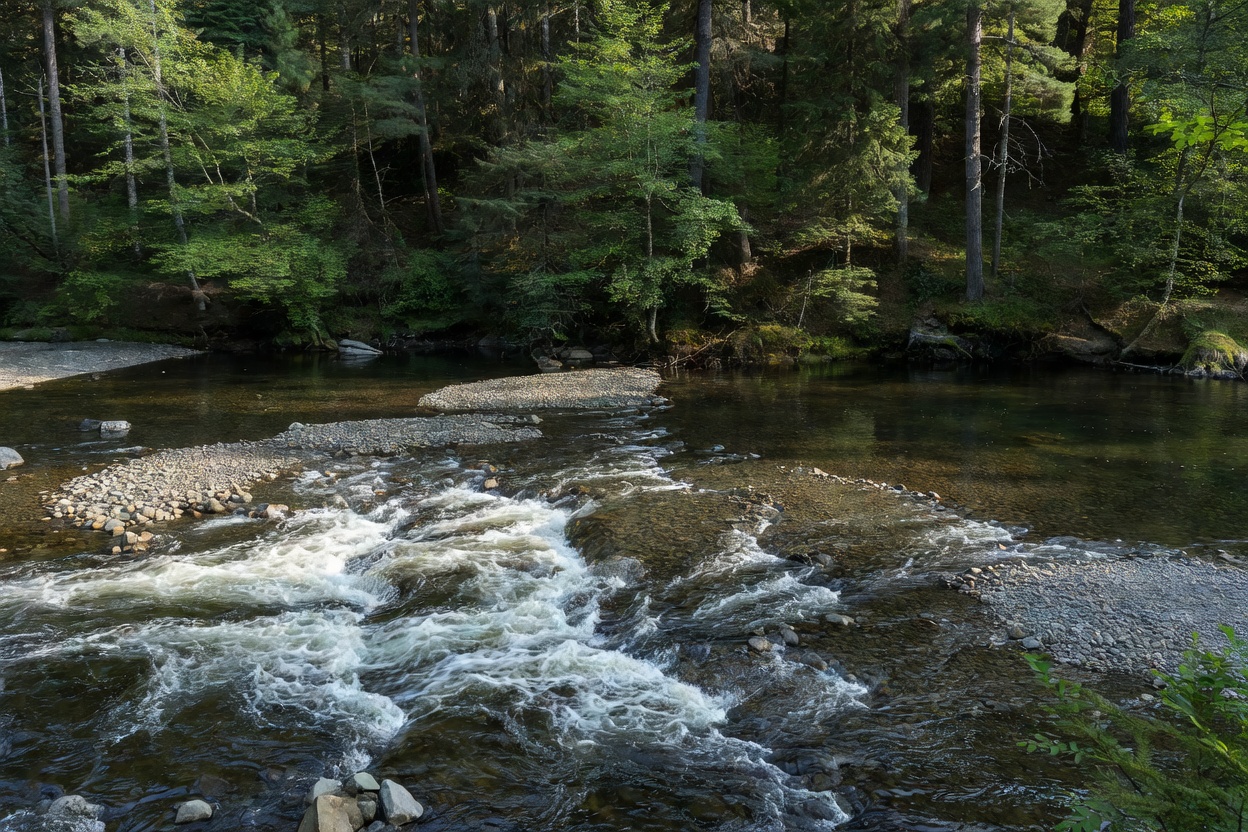
The Riffle-Pool Dynamic Architecture
Healthy gravel-bed rivers exhibit an alternating rhythm of shallow, high-velocity riffles and deep, tranquil pools spaced at intervals roughly five to seven times the channel bankfull width. Channelized waterways lack this alternation, leading to catastrophic habitat simplification.
- Riffles: Shallow aerated runs with coarse gravel for macroinvertebrates
- Pools: Deep low-velocity refuge during summer droughts and winter spates
- Glides: Transitional zones supporting submerged macrophytes
1. Spawning Substrate and Sediment Sorting
Lithophilic fish species (such as brown trout, Atlantic salmon, and European grayling) require well-oxygenated, uncompacted gravel beds free from excessive fine silt (< 1 mm diameter).
When fine sediments infiltrate gravel matrices, interstitial water flow decreases, depriving incubating fish ova and alevins of dissolved oxygen. Restoration methods include introducing washed river gravels, installing deflector groynes to accelerate flow and naturally winnow fine silts, and catchment-level soil stabilization on adjacent agricultural slopes.
2. Large Wood Structures (LWD) and Hydraulic Scour
Large wood structures—consisting of whole tree trunks, root wads, and anchored log deflectors—are critical natural structural elements of intact watercourses.
Wood creates localized pressure gradients: water is forced downward and around the obstruction, carving localized scour pools while depositing gravel bars directly downstream. These formations provide nursery habitat for juvenile fish, shelter from piscivorous birds, and colonization surfaces for epilithic algae and wood-boring caddisfly larvae (Trichoptera).
| Structure Type | Hydraulic Function | Target Taxa | Engineering Consideration |
|---|---|---|---|
| Flow Deflector (Kicker) | Directs flow toward center; induces lateral scour | Salmo trutta, benthic cottids | Requires upstream root pin or earth anchor |
| Root Wad with Stem | Provides deep undercut bank cover and turbulence | Adult salmonids, European eel | Bank keying into compacted subsoil is mandatory |
| Coarse Brushwood Bundle (Fascine) | Traps fine suspended silt; creates soft margin | Odonata larvae, juvenile cyprinids | Biodegradable untreated stakes, stakes driven > 1 m |
3. Benthic Macroinvertebrate Niches
Aquatic insects (Ephemeroptera, Plecoptera, and Trichoptera, collectively termed EPT taxa) depend strictly on substrate micro-topography. Cobbles, gravels, submerged mosses, and leaf packs support detritivores, scrapers, and filter-feeders.
Homogeneous sandy or silty river beds support only burrowing tubificid worms and chironomids. Reinstating coarse substrate diversity rapidly restores the foundational tiers of the aquatic trophic pyramid.
4. Longitudinal and Lateral Habitat Continuity
Isolated restoration patches fail if aquatic organisms cannot migrate between complementary life-stage habitats. Feeding grounds, spawning riffles, overwintering deep pools, and tributary thermal refuges must remain connected.
Removing obsolete weirs, retrofitting passable nature-like fish bypass channels, and breaching agricultural flood dykes to restore backwater wetlands ensures that fish and mobile invertebrates can escape lethal conditions during heatwaves or high-discharge flood events.
Good For
- Recovering depleted wild fish populations by restoring clean spawning gravels.
- Elevating EPT invertebrate diversity and secondary biomass production.
- Generating high-velocity flow refugia during high-discharge spates.
- Creating thermal micro-climates using deep pools and shading canopies.
What to Know
- Unanchored wood can migrate downstream during 10-year flood events, risking culvert blockages.
- Adding gravel without stopping upstream sediment erosion leads to rapid re-silting.
- In-stream structures in urban flood zones require rigorous 1D/2D hydraulic model sign-off.
- Vegetation establishment requires temporary exclusion fencing to prevent livestock trampling.