River Rewilding & Natural Processes: Unconstrained Fluvial Dynamics
Process-based restoration removes physical constraints to let stream power, sediment flux, and wood deposition self-organize the river corridor.
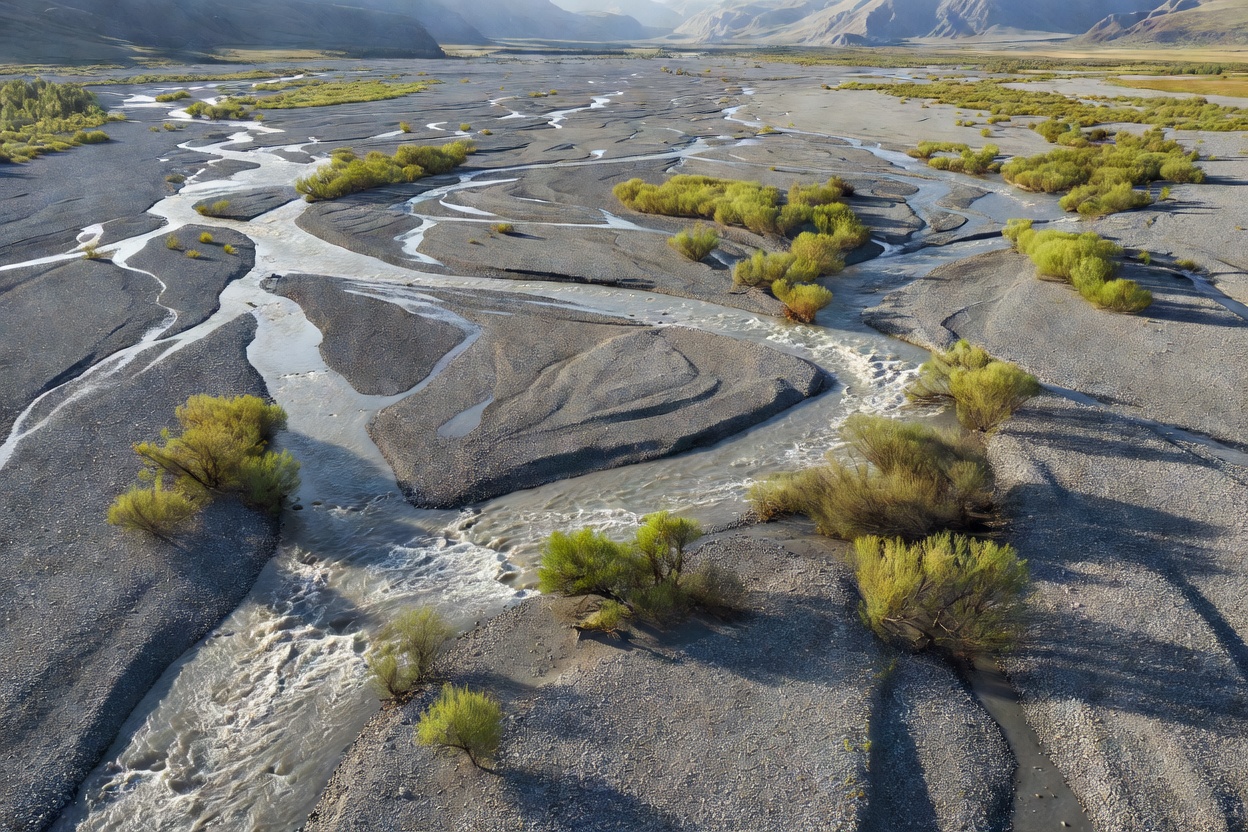
Process-Based Restoration vs. Fixed Channel Engineering
Traditional stream engineering sought to pin a channel into a predetermined, static design. Rewilding recognizes that rivers are dynamic conveying systems that naturally shift across their valley floor through bank erosion, avulsion (rapid formation of a new channel course), and sediment redistribution.
- Process-Based: Relies on natural flood power and sediment delivery to sculpt forms
- Fixed Engineering: Stabilizes banks with rock armour or concrete riprap
- Core Outcome: Dynamic equilibrium that adapts naturally to climate shifts
1. The Concept of Channel Freedom Space
The "freedom space" concept (espace de liberté) delineates a spatial corridor across the valley bottom where the river is permitted to erode banks, deposit sediment bars, and flood naturally without threatening human life or essential infrastructure.
Within this zone, bank reinforcement revetments, gabion baskets, and sheet-pile walls are decommissioned or removed. As the stream erodes its outside banks, it recruits native gravels, silts, and fallen timber, sustaining self-renewing instream morphology without continued human intervention.
2. Barrier Removal: Longitudinal Reconnection
Over a million small barriers, low-head mill weirs, and culverts dissect European river basins. Even low weirs under two meters in height disrupt continuous sediment transport and hinder upstream fish migration.
Removing obsolete weirs initiates an immediate geomorphic response: the impounded reservoir upstream drains, exposing accumulated gravels and silts. Over several flood cycles, the river carves a new low-flow thalweg through this sediment, while downstream reaches benefit from restored coarse bedload delivery.
3. Comparing Process Rewilding and Engineered Designs
| Evaluation Attribute | Engineered Fixed Channel | Process-Based Rewilding |
|---|---|---|
| Initial Capital Cost | High (heavy earthmoving, concrete, stone haulage) | Moderate to low (primarily barrier removal and dyke breaching) |
| Long-term Maintenance | High; structural repairs required after severe flood events | Minimal; self-adjusting through gravel transport and vegetation |
| Ecological Resilience | Low; uniform geometry offers minimal refuge niches | High; diverse ages of gravel bars, side channels, and wetlands |
| Land Footprint Required | Narrow corridor; tightly bounded by banks | Wide valley floor corridor required for natural lateral movement |
| Predictability | Deterministic; fixed hydraulic channel geometry | Probabilistic; channel path adjusts in response to peak flows |
4. Flood Risk, Infrastructure, and Land-Use Constraints
Process-based river rewilding cannot be implemented in isolation from human geography. Where road embankments, railway lines, buried utility corridors, or residential developments flank the river, lateral channel migration must be constrained.
In semi-constrained reaches, practitioners apply stage-zero restoration or partial rewilding: historic embankments are set back several hundred meters rather than removed entirely, providing a wide buffer corridor while maintaining flood protection for downstream towns.
Good For
- Rural and semi-natural catchments with low infrastructure density.
- Re-establishing natural coarse sediment delivery to downstream degraded reaches.
- Eliminating long-term municipal maintenance costs for obsolete weir structures.
- Creating resilient, self-repairing wetland habitats that store carbon and floodwaters.
What to Know
- Requires formal hydraulic backwater risk assessments before removing weirs.
- May require purchasing flood easements or agricultural land within the migration zone.
- Initial sediment release during barrier removals must be managed to avoid smothering downstream beds.
- Unsuitable where bridges, buried gas pipelines, or buildings abut the river bank.