Water Quality & River Monitoring: Timeseries, Metrics, and Protocols
Restoration outcomes cannot be evaluated without rigorous multi-year baseline monitoring and matched post-intervention assessments.
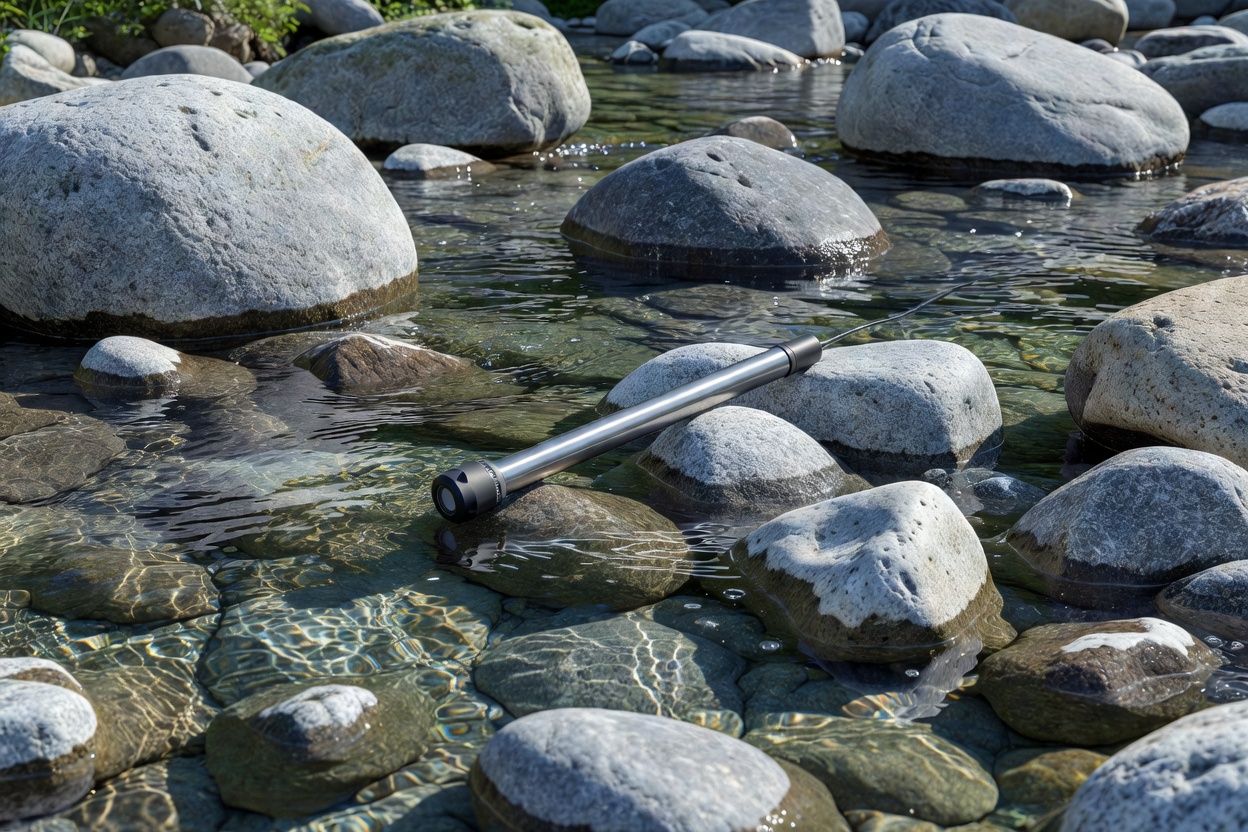
Why Single Spot-Samples Are Insufficient
Water chemistry in flowing streams fluctuates dramatically based on discharge, diurnal photosynthesis, water temperature, and agricultural runoff events. An isolated grab sample gives only a single snapshot and frequently misses acute low-oxygen sags or turbidity spikes following summer rainstorms.
- Continuous Loggers: Optical DO and thermistor loggers recording at 15-minute intervals
- BACI Architecture: Matched reference reach surveyed simultaneously with the target reach
- Temporal Breadth: Minimum 12 months baseline prior to civil works
1. Core Physicochemical Parameters
Practitioners track five fundamental chemical and physical parameters to evaluate whether habitat conditions support target ecological communities:
| Parameter | Measurement Unit | Ecological Significance | Sampling Standard |
|---|---|---|---|
| Water Temperature | Degrees Celsius (°C) | Controls metabolic rates, oxygen solubility; salmonids stress above 19 °C | Submerged waterproof loggers secured in shaded deep flow |
| Dissolved Oxygen (DO) | mg/L and % saturation | Critical for fish and benthic respiration; dips often occur at dawn | Optical luminescent sensor with automated wiper unit |
| Turbidity / TSS | NTU / mg/L | Indicates fine sediment transport that smothers spawning gravel beds | Near-infrared nephelometric sensors with calibration standards |
| Specific Conductivity | μS/cm | Reflects total dissolved ion concentrations; detects pollution inflows | Temperature-compensated four-electrode conductivity cell |
| Nutrient Fractions | mg/L (N-NO3, P-PO4) | Excess phosphorus and nitrogen fuel filamentous algae blooms | Spectrophotometric laboratory analysis of filtered samples |
2. Biological Indicators: Benthic Macroinvertebrates
Because aquatic organisms live continuously in the watercourse, their community composition integrates environmental stressors over weeks, months, or years.
Standardized kick-sampling protocols (using a 250 μm or 500 μm mesh hand net across riffles and marginal vegetation) allow calculation of biometric indices such as the BMWP (Biological Monitoring Working Party) score and ASPT (Average Score Per Taxon). The presence of stoneflies (Plecoptera) and caddisflies (Trichoptera) indicates well-oxygenated water and stable coarse bed conditions.
3. Physical and Geomorphological Monitoring
Ecological monitoring must be paired with physical surveys to verify whether restoration structures are shaping channel form as intended:
- Cross-Sectional Levelling: Fixed benchmark cross-sections surveyed annually with optical levels or RTK-GPS to detect bed incision or gravel deposition.
- Wolman Pebble Counts: Standardized random sampling of 100 bed particles across riffles to calculate grain size distributions (D16, D50, D84).
- Fixed-Point Repeat Photography: High-resolution photographs taken from identical surveyed positions across four seasons to document riparian vegetation growth.
4. Field Safety, Professional Protocols, and Permissions
Conducting field monitoring in river systems involves real environmental hazards, including rapid water level rises, slippery substrate, submerged obstacles, and biological contaminants (such as Leptospirosis/Weil's disease).
All in-stream work must adhere to formal risk assessments, appropriate personal protective equipment (personal flotation devices, wading sticks, slip-resistant waders), paired working protocols, and environmental agency permits before deploying logging stations or disturbing beds.
Good For
- Detecting diurnal oxygen depressions during summer low-flow periods.
- Providing objective evidence to verify whether restoration goals have been achieved.
- Detecting fine sediment wash-off from construction zones before permanent damage occurs.
- Calibrating long-term adaptive management and vegetation maintenance interventions.
What to Know
- Optical sensors require regular cleaning and biofouling removal every two to four weeks.
- Grab samples taken during sunny afternoons overestimate minimum dissolved oxygen levels.
- Biological communities take two to five years post-construction to fully re-establish.
- Equipment deployed in public watercourses requires vandalism-resistant secure housings.